


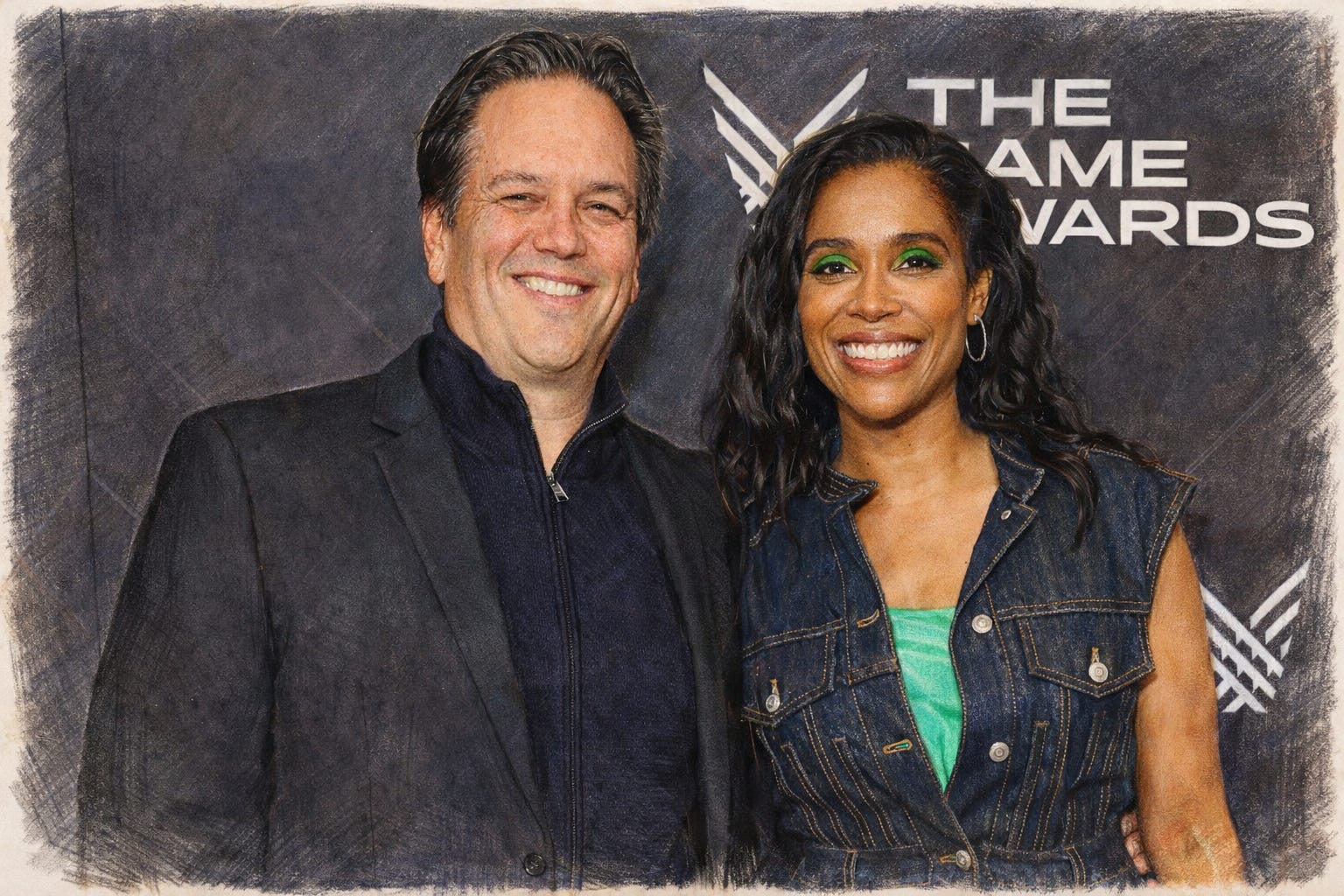
On February 20, 2026, in the middle of Xbox’s 25th anniversary year, a year that was supposed to signal renewal, Microsoft announced that Phil Spencer was retiring after 38 years at the company. In the same breath, Xbox president Sarah Bond resigned. And Asha Sharma, a senior executive from Microsoft’s CoreAI division who had never worked a day in gaming, was named EVP and CEO of Microsoft Gaming.
Just like that, the two most prominent faces of Xbox were gone. Replaced by someone most gamers had never heard of.
The reaction was immediate and loud: Who is this person? Why her? Does anyone at Microsoft actually care about games anymore?
Five weeks later, the jury is still out on Sharma. But the verdict on Microsoft’s understanding of gaming came in a long time ago. And the evidence is damning.
Follow the Money
Before we talk about leadership, culture, or strategy, look at the numbers. Because the numbers explain everything.
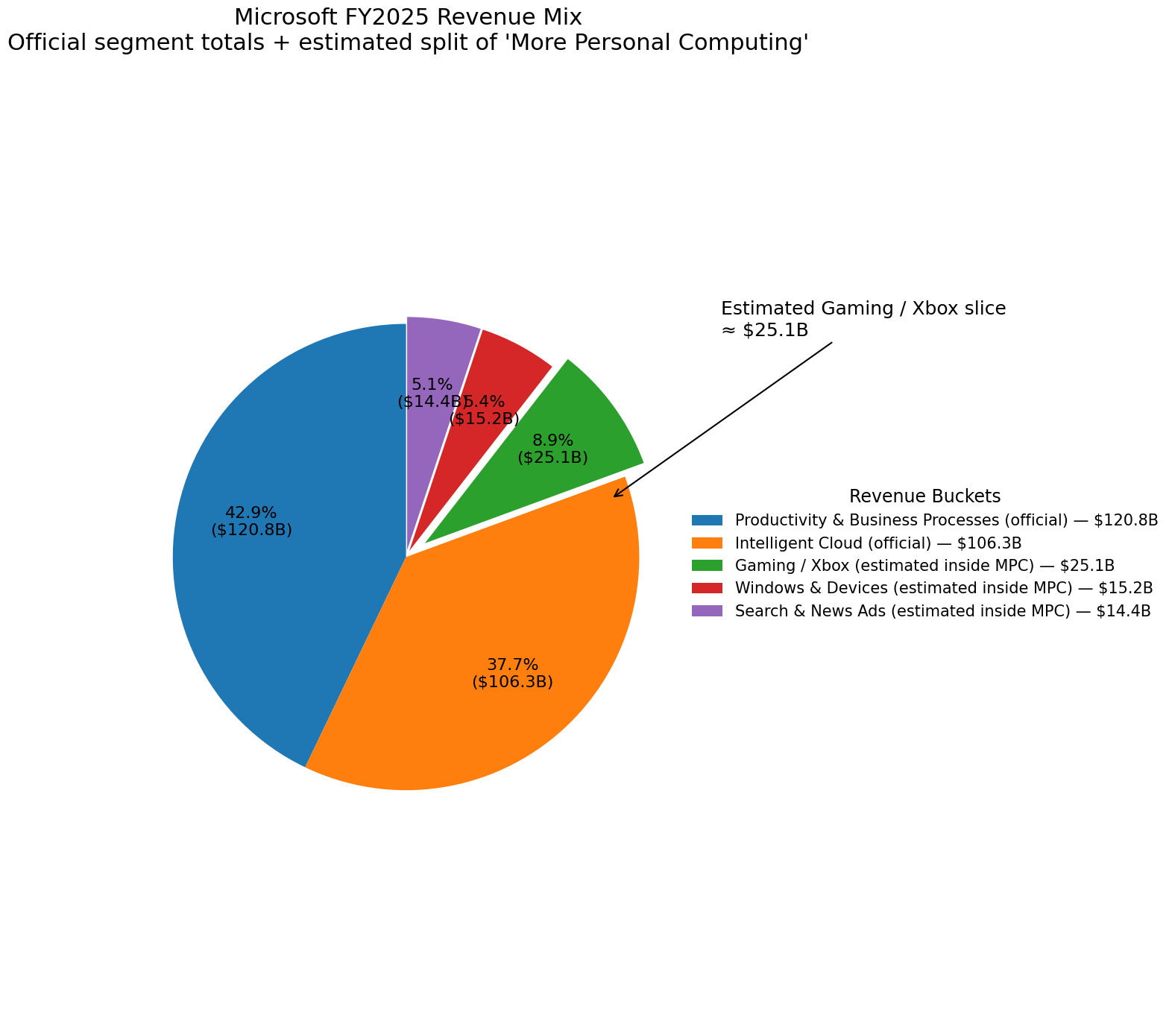
Microsoft does not report Xbox as a standalone audited revenue segment. It buries gaming inside a bucket called “More Personal Computing,” alongside Windows, devices, and search advertising. That’s the first tell. But based on Microsoft’s own FY2025 disclosures (gaming revenue up $2.0 billion (9%), Windows and Devices up $288 million (2%), Search and News Ads up $1.6 billion (13%), you can back into a defensible estimate of what the Gaming/Xbox slice actually looks like.
It’s roughly $25.1 billion. Out of $281.7 billion in total Microsoft revenue.
That’s 8.9%.
Look at the pie. Productivity & Business Processes (Office, LinkedIn, Dynamics) takes up 42.9% at $120.8 billion. Intelligent Cloud (Azure and the server empire) takes up 37.7% at $106.3 billion. Together, those two segments account for over 80% of Microsoft’s revenue. Gaming is the small green wedge jammed into the corner.
And even that $25.1 billion is misleading if you think of it as “Xbox.” It includes Xbox content and services (Game Pass, digital sales, Activision Blizzard revenue), Xbox hardware, and everything Microsoft acquired when it spent $68.7 billion buying Activision Blizzard and $7.5 billion on ZeniMax. Xbox hardware revenue fell 25% in FY2025. The growth came from content and services: software, subscriptions, and the games that came with the acquisitions. The console business itself is shrinking inside an already small slice.
When Satya Nadella looks at this pie chart, he doesn’t see a gaming empire. He sees a rounding error next to Azure. He sees 8.9% of revenue that should be optimized, scaled, and squeezed for more margin, the same way he’d think about any underperforming division.
And that’s exactly what he did.
The 30% Mandate
In October 2025, Bloomberg’s Jason Schreier and Dina Bass reported what many inside Microsoft already knew: CFO Amy Hood had imposed an across-the-board goal of 30% “accountability margins” on the Xbox gaming division, which is Microsoft’s internal term for profit margins. The target was set in fall 2023, and Hood’s finance team had been taking a larger role in the gaming business ever since.
Let that number sit for a second. Thirty percent.
The gaming industry typically operates at 17% to 22% margins. Even PlayStation, the dominant force in gaming, with $30 billion in FY24 revenue and more than double Xbox’s install base, hasn’t hit a profit margin above 13% in nine years. An S&P Global analyst called the 30% target the “outer range of what a gaming studio can typically reach in a boom year” and noted that margins like that are “usually reserved for a publisher that is really nailing it.”
Xbox was not nailing it. In the first nine months of FY2022, Xbox’s accountability margin was 12%. Microsoft was demanding they nearly triple it.
Before this mandate, Xbox developers weren’t asked to hit specific financial targets. They were told to focus on making the best games possible without worrying too much about finances. That philosophy, make great games and the business will follow, is the same philosophy that built every iconic gaming brand in history. It’s the philosophy PlayStation operates on today.
Microsoft replaced it with a spreadsheet.
And the results were immediate and devastating.
The Layoff Machine
On July 2, 2025, Microsoft gutted its gaming studios in a single day. Raven Software: 20 jobs. Blizzard Entertainment: roughly 100. The Initiative: around 50. Turn10 Studios: roughly 70. ZeniMax Online: 164. King: 200. Halo Studio and Bethesda Softworks: unknown numbers. All Microsoft-owned. All on the same day.
This wasn’t the first round. Microsoft had already cut thousands of gaming jobs across 2024. But the July 2025 cuts hit different, because of who they hit, and what Phil Spencer said about it.
Spencer sent an email to all Microsoft Gaming employees that day. Windows Central obtained it. Here’s the key line: “I recognize that these changes come at a time when we have more players, games, and gaming hours than ever before. Our platform, hardware, and game roadmap have never looked stronger. The success we’re seeing currently is based on tough decisions we’ve made previously.”
Read that again. The success we’re seeing is based on tough decisions we’ve made previously. He’s celebrating growth metrics (the same inflated “500 million monthly active users” number) while announcing mass layoffs to the people who created that growth. More players, more games, more hours. And the reward is a pink slip.
The ZeniMax Online story is the one that should haunt Microsoft’s leadership.
Employees at ZeniMax Online Studios had been working on an MMO codenamed Project Blackbird. According to TrueAchievements, as late as October 2024, eight months before the layoffs, the team had taken a demo build to Microsoft’s Redmond headquarters. The response from leadership was positive. Sources said the team saw “good things coming out of that,” and Microsoft was impressed with the game.
Eight months later, the project was canceled and 164 people lost their jobs. No warning. No indication the game was in trouble. Leadership liked what they saw in October. The 30% margin target killed it in July.
This is what happens when you run a creative industry on spreadsheet logic. You greenlight a game. The developers pour years of their lives into it. They demo it for you. You’re impressed. And then a CFO who has never played a video game in her life looks at the accountability margin projection and cancels the project, because a game that might be great isn’t guaranteed to be profitable enough to satisfy a target that no company in the industry can consistently hit.
The Price of Extraction
The 30% mandate didn’t just kill studios. It raised prices everywhere.
Game Pass Ultimate went from $20 to $30 a month, a 50% hike. Game Pass tiers were restructured in ways that made the service feel less like “the best deal in gaming” and more like a cable package designed to confuse you into overpaying.
Xbox consoles got price hikes. And in October 2025, The Verge reported that Xbox dev kits (the hardware that game developers need to build Xbox games) jumped from $1,500 to $2,000, a 33% increase. Microsoft’s justification? “The adjustment reflects macroeconomic developments.” That’s it. That’s the explanation. Macroeconomic developments. I want you to imagine someone at Microsoft typing that sentence into a press release with a straight face. I want you to imagine it being reviewed by a communications team, approved by a manager, and published, and at no point did anyone in the room say, “Hey, do we maybe want to explain why we’re charging game developers more money to build games for a platform that’s losing market share?”
Developers scoffed. And they scoffed because what Microsoft is doing is so cosmically, hilariously out of touch that it would be funny if it weren’t real.
Let me paint you a picture of the competitive landscape so you can understand just how absurd this is.
Unreal Engine 5, the engine powering some of the most visually ambitious games on the planet, the engine behind Fortnite, the tool that nearly 28% of all Steam games are built on, is completely free. Free to download. Free to use. Full source code access included. A developer doesn’t pay Epic Games a single cent until their game earns over $1 million in revenue, at which point a 5% royalty kicks in. That’s it. You can build a AAA-quality game from scratch, ship it to the world, and owe Epic absolutely nothing unless you’ve already made a million dollars. The price of admission to the most powerful game engine on Earth is zero.
Unity, the engine behind over 51% of all Steam releases, the engine that powers more games than any other on the planet, offers its full Personal tier for free to any studio making under $200,000 a year. Unity even tried to squeeze developers once with a controversial Runtime Fee in 2023. You know what happened? The indie community revolted overnight. Developers threatened to leave. Stock price cratered. Unity backed down, canceled the fee, and went crawling back to its subscription model. The lesson was loud and clear: you do not charge game developers to build games. The entire industry watched that play out in real time.
Apparently, nobody at Microsoft was watching.
Between them, Unreal and Unity power roughly 80% of all games released on Steam. Eighty percent. Their business model is built on the simplest premise in platform economics: make the tools free, lower every barrier to entry, and build an ecosystem so large and so loyal that success becomes self-sustaining. You don’t charge developers to build for your platform. You incentivize them. You make it so easy, so frictionless, and so economically rational to build on your tools that developers would feel stupid going anywhere else.
And then there’s Microsoft, standing on the other side of the room, hiking dev kit prices by 33% and blaming “macroeconomic developments.”
I genuinely struggle to imagine the boardroom conversation where this decision was made. Picture it: a room full of executives at one of the most powerful technology companies in the history of the world. A company with $281 billion in annual revenue. A company that just spent $76 billion acquiring game studios. And someone in that room, someone with a title and a salary and presumably a college education, raised their hand and said, “What if we charged game developers more to build games for the platform we’re desperately trying to save?” And the rest of the room said yes. They said yes to that. Someone took notes. Someone drafted a memo. Someone told The Verge it was about macroeconomic developments. And nobody, not one person in the entire decision chain, said, “Wait. Unreal is free. Unity is free. Eighty percent of the industry builds on free tools. Are we sure we want to be the ones charging more?”
This is the kind of decision that makes you wonder if anyone at Microsoft Gaming has ever actually talked to an indie developer. Or visited a game jam. Or looked at what it costs to ship a game on literally any other platform in 2026.
There was a time when Microsoft understood this. There’s a famous video of Steve Ballmer, drenched in sweat, bouncing across a stage like a man possessed, screaming “Developers! Developers! Developers! Developers!” at a Microsoft conference. It became a meme, but the philosophy behind it was dead serious. Microsoft’s entire empire was built on making developers feel like the most important people in the room. Windows won because developers built for Windows. Xbox won the 360 generation in part because Microsoft made it easier and cheaper to develop for Xbox than for PlayStation 3. The developer relationship wasn’t a nice-to-have. It was the strategy.
That philosophy is dead. Buried under a CFO’s margin target and a $500 dev kit price hike that tells every independent game developer in the world: we don’t need you as much as you need us.
Except they do. That’s the part that makes this go from laughable to tragic. Microsoft needs developers more than developers need Xbox. In 2026, a game studio can ship on Steam, PlayStation, Nintendo Switch 2, and mobile, and skip Xbox entirely, without losing a minute of sleep. The power has shifted. Developers have options. Microsoft is acting like it’s still 2008 and the 360 is king.
It’s not. And every dev kit price hike, every Game Pass increase, every studio closure makes it easier, not harder, for developers to walk away.
Every one of these decisions traces back to the same root: a profit margin target that has no business being applied to a gaming division, imposed by financial leadership that either doesn’t understand how the gaming industry works, or understands perfectly and simply doesn’t care.
The AI Connection
Here’s the part that ties it all together.
The 30% accountability margin was imposed in fall 2023. What else happened in fall 2023? Microsoft was in the middle of the most aggressive AI investment spree in corporate history. Billions into OpenAI. Copilot being jammed into every Microsoft product. The CoreAI division (the one Asha Sharma would later run) being stood up as a major new business unit.
Microsoft Research published a year-end recap in December 2023 titled “A Year of Groundbreaking AI Advances and Discoveries.” This was the company’s priority. This was where the money and attention were going. AI was the future, and every other division needed to justify its existence on the balance sheet, or be squeezed to fund the bet.
Xbox wasn’t squeezed because it was failing. Xbox was squeezed because AI needed to be fed.
And here’s the irony. I say this as someone who uses AI tools every day. I’m building a SaaS product right now with the help of Claude and other LLMs, and the acceleration is real. AI has genuinely helped me build things I couldn’t have built alone. But the fact that AI is a powerful tool doesn’t mean every division of a company should be sacrificed at its altar. You can acknowledge that AI is transformative without accepting that it justifies gutting a creative industry to pay for it.
The gamers who are angry about this aren’t anti-technology. They’re anti-extraction. They can see what happened: Microsoft bought $76 billion worth of gaming studios, imposed a profit margin that no gaming company can sustain, used the shortfall as justification to cut jobs and raise prices, and redirected the financial energy of the company toward AI, while hiring an AI executive to run the gaming division.
That’s not a gaming strategy. That’s an asset strip.
The Exodus, and Why Sarah Bond Mattered More Than Microsoft Realized
Now the leadership departures make sense. But to understand why the Xbox community felt the ground shift in February 2026, you have to understand what Sarah Bond actually represented. Not just as a title on an org chart, but as a signal to the people who built, played, and believed in Xbox.
Phil Spencer had been at Microsoft for 38 years. He’d run gaming for 12 of them. He watched the 30% mandate descend on his studios. He watched the layoffs. He signed the emails. Whether he agreed with the financial pressure or simply couldn’t stop it, he was done. He told Nadella in the fall of 2025 that he was planning to step back. His retirement was announced in February 2026.
Spencer’s departure, while surprising in its timing, was at least legible. A veteran stepping back after nearly four decades. Fair enough.
Bond’s exit was different, and it sent shockwaves through the entire ecosystem.
Bond joined Microsoft in 2017, overseeing gaming business partnerships. She came from McKinsey and T-Mobile, the world of strategic operations, not game development. But she became something that mattered enormously to the Xbox ecosystem: the person who connected the business to the developers. She brokered partnerships. She expanded Game Pass into the subscription juggernaut it became, a service that hit $5 billion in annual revenue under her leadership. She drove the cloud gaming expansion that let console owners play on phones and tablets. She launched the ROG Xbox Ally handheld partnership with ASUS. She set up a dedicated team for backward compatibility and game preservation, future-proofing digital libraries across hardware generations. She led the integration of Activision Blizzard’s massive portfolio into the Xbox ecosystem after the $68.7 billion acquisition.
When Bond was promoted to president of Xbox in October 2023, it felt like succession planning in motion. Spencer was the visionary. Bond was the operator who made the vision real. She reported directly to him, and everyone inside and outside the company assumed she’d eventually take his job.
She was also the first Black woman to serve as president of Xbox, a Yale and Harvard Business School graduate who championed diversity initiatives, served as executive sponsor of the Blacks @ Microsoft employee resource group, and worked to bring more BIPOC creators into game development. In an industry where only 2% of creators have historically been Black, that representation mattered. It was a statement about what Xbox valued.
For the developer community inside Microsoft’s gaming division, Bond was the connective tissue. She sat between the studios and the business side, someone who understood what the developers were building and could translate it into language that the finance team and the executive layer would support. In a company as large as Microsoft, that kind of bridge is irreplaceable. Studios don’t just need someone who approves budgets. They need someone who advocates for them, someone who can walk into a meeting with the CFO and argue that a game needs another year, or that a risky creative bet is worth funding even if the margin projections don’t look perfect on a spreadsheet.
So Bond’s departure carries a painful duality. She did things that mattered enormously: Game Pass, cloud gaming, backward compatibility, developer partnerships, the Activision integration, representation in leadership. And she also did things that damaged the brand.
According to The Information, Bond was the architect behind the “This is an Xbox” marketing campaign, the one that told consumers any device with a screen could be an Xbox. After the previous head of marketing left, the marketing teams reported directly to her. The campaign was her vision, and it was deeply unpopular, not just with fans but with internal staff who felt it actively undermined the console they were building. One employee described her management style as rigid: “If you didn’t follow the vision or questioned it, you were out.”
There was also the larger strategic tension. Phil Spencer had directed the effort to decouple Microsoft’s dependency on Xbox consoles, to turn Xbox from a hardware brand into a platform and services ecosystem. Bond was the primary executor of that strategy. She pushed Game Pass as the center of gravity, drove the multiplatform expansion, and worked to turn every screen into an Xbox. In one sense, she was doing exactly what Microsoft’s leadership asked her to do. In another, she was systematically dismantling the thing that made Xbox fans loyal in the first place.
But here’s why her resignation, combined with Spencer’s retirement, on the same day, sent a signal that reverberated far beyond Redmond.
For the studios inside Microsoft Gaming, losing both leaders simultaneously meant that the last two executives who had any relationship with the development teams were gone. These were the people who had visited studios, who had seen demos, who had context for what each team was building and why it mattered. Asha Sharma had none of that context. She came from CoreAI. She’d never reviewed a game milestone, never approved a greenlight, never argued for a studio’s budget in front of the CFO.
Developers inside Microsoft weren’t just losing leaders. They were losing their advocates. In a division already reeling from mass layoffs, studio closures, and a 30% margin mandate that had killed projects leadership praised, losing the last people who could fight for them felt like the final signal. The message was clear: the people who understood what you do, who could translate your work into terms the business side respected, who could protect you from the spreadsheet, they’re gone. And the person replacing them has never shipped a game.
For the Xbox gaming community, the signal was equally devastating, even if it arrived differently.
Xbox gamers are loyal in a way that most consumers aren’t. They don’t just buy a console. They join a tribe. They defend Xbox in comment sections, on Reddit, on Twitter, in group chats. They argue with PlayStation fans not because they think it’s a rational debate but because Xbox is part of their identity. When you’ve spent a decade in Halo lobbies, when your Gamertag has been the same since high school, when your friend group was built through Xbox Live, the platform isn’t a product. It’s a social fabric.
That loyalty means Xbox gamers pay attention to leadership in a way that Samsung phone owners don’t track Samsung executives. They knew Phil Spencer by name. They knew his Gamertag, P3. They watched his interviews. They followed his social media. They had opinions about Sarah Bond, some positive, some critical, but always engaged. These weren’t passive consumers who would shrug at a leadership change. These were people who understood that the person running Xbox determined whether the games got made, whether the studios stayed open, whether the platform still felt like home.
So when Spencer and Bond both left on the same day, replaced by someone from the AI division that gamers already associated with the layoffs, the cost-cutting, the corporate machinery that had been grinding their favorite studios into dust, the community didn’t just notice. They panicked.
Forums lit up. Reddit threads went nuclear. YouTube channels with hundreds of thousands of subscribers published videos with titles like “Xbox Is Over, Now We Know Who Is Responsible.” The sentiment wasn’t just anger. It was grief. The feeling that the last people in the room who had any connection to gaming were gone, replaced by someone who represented everything gamers feared about Microsoft’s direction.
The lesson Xbox gamers took from Bond’s tenure, and from her departure, is simple and brutal: it doesn’t matter what leadership says. It matters what leadership does. The last two leaders who had any gaming credibility just walked out the door. What walks in next will be judged by that standard, whether Asha Sharma likes it or not.
The Outsider

Asha Sharma’s resume is impressive. Just not in the way gamers care about.
She was COO at Instacart, VP of product at Meta, and most recently ran Microsoft’s CoreAI division, the same AI empire that was being built while Xbox studios were being gutted to hit margin targets. Nadella hired her because she’s scaled consumer platforms to billions of users and aligned business models for long-term value.
Gamers heard “AI executive with no gaming background” and drew their own conclusions.
Sharma has acknowledged she has “a lot to learn.” She shared her Gamertag (created recently) and listed Halo, Valheim, and GoldenEye as favorites. She agreed to play Borderlands 2 with fans. When IGN pressed her on authenticity, she was direct: her goal isn’t to be the best gamer in the room, it’s to make Xbox the best place to play.
But gaming isn’t an industry where you learn the culture from the outside and apply it like a framework. You either feel it or you don’t. The people who wore Master Chief helmets to midnight launches, who spent thousands of hours in Halo lobbies, who evangelized Xbox to every friend who’d listen, they can tell the difference between someone who gets it and someone who’s studied the briefing document.
The jury is out on Sharma. It’s going to be out for a while. And this jury is finicky as hell.
The First Move
To her credit, one of Sharma’s very first acts as CEO was to kill the “This is an Xbox” campaign. Not quietly sunset it. Kill it. As of mid-March 2026, all evidence of the campaign was scrubbed from Microsoft’s online presence. A Microsoft spokesperson confirmed: “Asha retired ‘This is an Xbox’ because it didn’t feel like Xbox. She is personally leading a reset of how we show up as a brand.”
At her first town hall with the Xbox team in Redmond, she said she wanted Xbox to be a “reference console,” the ideal console against which every other console is judged. Xbox general manager Chris Charla described the room: “People went from being pretty nervous, like, ‘What’s going on, what’s happening?’, to by the end of that day it was, like, seeing people had exhaled.”
She’s also said she has “no tolerance for bad AI” and explicitly rejected “soulless AI slop” in gaming. That’s a meaningful thing to say when you literally ran Microsoft’s AI division six weeks ago.
But killing a bad marketing campaign is the lowest possible bar. It’s like a new restaurant manager actually enforcing the handwashing sign. You don’t get credit for stopping something that should never have existed. You get credit for what you build next.
And the question Sharma can’t answer yet, the one that matters more than anything she says in a town hall, is whether the 30% accountability margin is still in effect. Because if it is, nothing else she does will matter. You can’t build a “reference console” and nurture creative studios while a CFO is holding a spreadsheet to everyone’s throat.
The Culture Problem Microsoft Can’t See
Here’s what Satya Nadella fundamentally misunderstands about gaming, and it’s the same thing every platform-minded executive misunderstands: gaming is not an industry you optimize. It’s a relationship you earn.
Most industries work the way Microsoft thinks. You identify a market. You build a product. You solve a distribution problem. You maximize revenue per user. You build a defensive moat. You scale.
Gaming doesn’t work that way.
Gaming is built on relationships. Between players and the characters they inhabit, between fans and the franchises they love, between a community and the platform that houses it. A Halo fan doesn’t just play Halo. They wear the t-shirt. They buy the energy drink. They argue about lore in forums at 2 AM. They recruit their friends. They are unpaid brand ambassadors who do more marketing in a single Xbox Live party chat than a million-dollar ad campaign.
Steam users are the same way about Half-Life. Full disclosure: I’m one of them. I was never a huge Halo guy, but I know plenty of people who are, and I’ve watched them defend that franchise like it was family. I get it because I’m the same way about Half-Life. The best version is on PC, will always be on PC, and I will tell you that until you beg me to stop. PlayStation fans are the same way about God of War. Nintendo fans are the same way about Zelda.
And if you want the most extreme example of what gaming loyalty actually looks like, look at StarCraft in South Korea. An entire country built a competitive culture around that game. Professional leagues. Television broadcasts. National celebrities who are famous for nothing other than being really, really good at StarCraft. It’s not a hobby over there. It’s closer to a religion. Microsoft owns Blizzard now, which means Microsoft owns StarCraft. Imagine for one second if someone in Redmond decided to announce that StarCraft is coming to PlayStation 5 and Nintendo Switch 2. Imagine telling an entire nation of fans who built their identity around that game on PC that their platform doesn’t matter anymore. They would riot. I’m not being dramatic. There would be actual civic unrest. That’s how deep gaming loyalty runs when a company earns it and a community owns it.
That’s not brand loyalty in the way a McKinsey deck defines it. That’s identity. That’s tribe.
Compare this to PlayStation. Sony completely understands that gaming operates on 17-22% margins and invests accordingly. They don’t try to make PlayStation perform like a cloud service. They don’t impose profit targets that would make a Wall Street analyst blush. They make great games, they respect their community, and they let the business follow the culture. It works. PlayStation outsells Xbox by multiples, not because Sony has better technology, but because Sony understands the relationship.
When Nadella looks at Halo and thinks, “This makes a ton of money with just Xbox players, so why can’t PlayStation 5 owners enjoy it too?”, he’s not wrong about the revenue opportunity. He’s catastrophically wrong about the cost. Because those hardcore fans who wear the shirt, who tattoo the logo, who are the brand, they didn’t just buy the game. They bought the idea that Halo belongs to Xbox. That Xbox is home. That their loyalty means something.
Take that away, and you don’t just lose a customer. You lose an evangelist. You lose the person who was doing your marketing for free. You lose the emotional infrastructure that no amount of advertising spend can replace.
Satya sees “console wars are over” and thinks it’s time to monetize across platforms. He doesn’t see the hardcore Halo player who rabidly advertises their favorite game on their t-shirt and energy drink. He doesn’t understand that those people are the strategy.
The culture is the strategy. It always has been.
Gamers Are Not Excel Users
This is the part that should scare Microsoft, and apparently doesn’t.
Excel users don’t form tribes. Teams users don’t build identity around their productivity suite. LinkedIn users don’t tattoo the logo on their forearms. Those products win on features, pricing, and distribution. You can optimize your way to dominance in enterprise software.
Gamers are different. They are activists. They strategize with their wallets. They organize boycotts that actually work. They review-bomb games on launch day. They cancel subscriptions in coordinated waves. They make YouTube videos with hundreds of thousands of views explaining exactly why they feel betrayed. They are, by any rational corporate assessment, dangerous, and any CEO who ignores that is playing with a kind of fire that doesn’t show up on quarterly earnings calls until the building is already burning.
Look at what’s already happened. Xbox hasn’t outsold Sony and Nintendo since 2008. Game Pass growth stalled, then prices jumped 50%. Studios closed. Studios that were making good games, that had impressed leadership months earlier. Thousands of jobs cut. Dev kit prices hiked 33%. Major exclusives underperformed or delayed. The “This is an Xbox” campaign actively told console owners their hardware was irrelevant. Halo, Halo, shipped to PlayStation.
Each of these decisions made sense on a spreadsheet. Each was defensible in a boardroom. And each told the core community the same thing: You are 8.9% of our revenue, and we’re going to treat you like it.
The 500 Million Mirage
Microsoft loves to point to “over 500 million monthly active users” as evidence that Xbox is thriving. Sharma used this number in her first LinkedIn post as CEO. Phil Spencer cited it in the same email where he announced mass layoffs.
It includes Windows gamers. Steam players. Minecraft players on every platform. Candy Crush players on mobile. Anyone from Activision Blizzard’s portfolio. If you’ve ever touched a Microsoft account in a gaming context, you’re in the count.
And yes, Microsoft owns Candy Crush. They acquired King as part of the Activision Blizzard deal. Candy Crush alone has hundreds of millions of players across mobile. Those people have absolutely no idea they’re being counted as part of the Xbox ecosystem. Your grandma matching candies on her iPad during a dentist appointment is, according to Microsoft’s metrics, an Xbox user. Let that sink in. Grandma is an Xbox user, but the 164 developers at ZeniMax Online who were building a game Microsoft praised eight months earlier are unemployed.
The actual Xbox console base, the people who bought the hardware, who pay for Game Pass, who identify as Xbox gamers, sits closer to 15 to 20 million active users. That’s the community. That’s the tribe. And it’s shrinking.
Counting Windows users as Xbox users is like counting everyone who’s ever used a Microsoft keyboard as an Office 365 subscriber. The number is technically defensible and culturally meaningless. It’s the kind of metric you cite when you’re trying to impress shareholders while firing the people who make the product.
Project Helix: The Bet
Project Helix, Xbox’s next-generation console, was detailed at GDC 2026. It’s a console-PC hybrid powered by a custom AMD SoC on RDNA 5 architecture, co-designed for next-gen DirectX, with ray tracing performance Microsoft calls “an order of magnitude leap.” It will play both Xbox console games and PC titles from storefronts like Steam and GOG. Developer alpha kits ship in 2027.
It’s technically ambitious. But it carries the exact tension that has defined Xbox for years: is this a console for gamers, or a platform for everyone? Because “a PC that also runs Xbox games” could be exactly what the market wants. Or it could be the “This is an Xbox” philosophy repackaged in better silicon.
If Project Helix launches and feels like a gaming PC with an Xbox skin, the core community will see right through it. If it launches and feels like home, like the Xbox 360 felt, like a console built for gamers by people who love games, it could be the reset Xbox desperately needs.
The difference between those two outcomes isn’t hardware specs. It’s philosophy. And philosophy is exactly what’s been broken.
Dear Satya
Here’s the part nobody at Microsoft wants to hear.
You spent $68.7 billion acquiring Activision Blizzard. You spent $7.5 billion on ZeniMax. You now own Call of Duty, World of Warcraft, Diablo, Candy Crush, The Elder Scrolls, Fallout, Doom, Halo, Minecraft, and Forza. Some of the most valuable franchises in entertainment history.
And your gaming division is 8.9% of your revenue. A green sliver on a pie chart dominated by Azure and Office.
You responded to that by imposing a 30% profit margin on an industry that operates at 17-22%. You let your CFO run gaming like it was a cloud division that needed to hit quarterly targets. You watched as that mandate produced mass layoffs, studio closures, price hikes, and the cancellation of games that your own leadership had praised months earlier. Your studios made great games and got fired for it.
You look at that pie chart and see a sliver to be optimized. Gamers look at it and see their entire world.
The gaming community is not a user base. It’s not a TAM. It’s not a growth vector. It’s a tribe of people who will go to war for a brand that respects them, and will burn it to the ground if it doesn’t. They are strategizing with their wallets right now. They are canceling subscriptions. They are buying PlayStations. They are making very loud, very public decisions about where their money and loyalty go.
If you continue treating Xbox like a cloud division with a controller, if the 30% mandate stays, if the layoffs continue, if the culture keeps getting sacrificed for margin, you might as well drop the name entirely. Call it Microsoft Gaming. Call it whatever you want. Because the thing that made “Xbox” mean something, the identity, the community, the culture, the tribe, will already be gone, the community, the culture, the tribe, will already be gone.
The culture is the strategy, Satya. It always was.
And right now, 8.9% of your revenue is screaming that at you, and you’re not listening.
The Nuclear Option
Here’s a thought that sounds radical until you think about it for thirty seconds: sell Xbox.
Not to another tech conglomerate that will treat it like a line item. Sell it to someone who actually gives a damn about games. A billionaire who’s a real gamer. A private equity group filled with people who understand that gaming is culture first and business second. Someone who would look at Halo, The Elder Scrolls, Call of Duty, and Minecraft and see them not as assets to be optimized but as legacies to be honored.
It raises a fascinating question: how many billionaires are actually hardcore gamers? How many would run Xbox the way it deserves to be run, with passion, with patience, and with the understanding that the 17-22% margins the industry operates on aren’t a problem to be solved but a reality to be respected?
I don’t know the answer. But I know this: whoever ran Xbox next would need to understand that the brand’s value isn’t in its revenue. It’s in the millions of people who built their identity around it. People who are still here, still waiting, still hoping someone at the top will finally, actually, give a damn.
Microsoft clearly doesn’t. And that might be the most honest thing you can say about Xbox in 2026.
The Bottom Line
Asha Sharma is not the villain of this story. She might even be part of the solution, if the philosophy above her changes. But the jury on her is going to be out for a long time, and this is a jury that doesn’t grant continuances.
The villain is a corporate philosophy that treats gaming like any other division to be optimized. A CFO who set a 30% margin target that no gaming company can sustain. A CEO who let AI cannibalize the resources gaming needed. A leadership structure that looked at $76 billion in acquisitions and asked “how fast can we squeeze this?” instead of “how do we honor what we bought?”
The Xbox fanbase isn’t dead. But it’s been abandoned. They didn’t walk away. They were pushed. Pushed by decisions that treated them like a rounding error. Pushed by a 30% mandate that killed studios making good games. Pushed by a company that forgot what made Xbox matter in the first place.
Gamers don’t need perfection. They need passion. They need consistency. They need someone who gives a damn.
Right now, Microsoft is giving them strategy instead of soul.
And strategy has never, not once in the history of this industry, brought a single gamer back.
Sources: Bloomberg (Jason Schreier, Dina Bass, October 23, 2025); Windows Central (Samuel Tolbert, July 2, 2025); TrueAchievements (Tom West, July 4, 2025); The Verge (Tom Warren, October 21, 2025); The Information; GameSpot; Bellular News.
Data note: Microsoft does not report Xbox as a standalone audited revenue segment. The $25.1B Gaming/Xbox estimate is derived from Microsoft’s FY2025 disclosures (Gaming revenue up 9%, Windows & Devices up 2%, Search & News Ads up 13%) normalized against the audited More Personal Computing segment total of $54.6B. Microsoft’s total FY2025 revenue was $281.7B. Xbox hardware revenue fell 25% in FY2025; growth was driven by Xbox content and services, including Activision Blizzard. Industry margin comparisons use different accounting standards (GAAP, IFRS, ASBJ) and Microsoft’s internal “accountability margin” metric is not directly interchangeable with competitors’ reported operating margins.
This post nails something a lot of companies keep forgetting, relationships matter. That is true in gaming, and it is just as true for movie franchises and books adapted into live-action series. Fans, developers, readers, and viewers know when the people in charge truly care about the world they are stewarding, and they know when they are being treated like revenue targets. You cannot fake that bond. You cannot fake trust. And once a franchise starts losing sight of the people who gave it meaning in the first place, the damage spreads fast.