



Let’s get this out of the way: AI is absolute garbage at making logos. Not mid. Not decent. Garbage. And before you come at me with some synthetic brand mark made in Midjourney or DALL·E that looks kinda cool in a vacuum—hold up. That’s the design equivalent of nailing a three-pointer in practice with no defenders. Try doing it in Game 7 of the Finals. Different league.
Logos Are Emotional Landmines, Not Just Pixels
A great logo is less design, more signal. It’s the emotional fingerprint of a company. And AI? It still thinks a logo is a fancy graphic with a keyword or two thrown in. It doesn’t grasp:
Why a simple swoosh says "speed"
Why the Apple bite means “thinking different”
Or why some logos are meant to be boring—because the brand is the hero, not the design
Logos are decisions. Thousands of them. Made under pressure, aligned with legacy, target audience, psychology, and vision. Most of this nuance? AI skips. Or worse—mimics badly.
Why AI Can’t Touch Real Brand Strategy (Yet)
Here’s what branding specialists get and where AI still fumbles - even with all that training data:
What Branding Pros Get:
Emotional subtext – Understanding how certain colors, shapes, or symbols evoke subtle emotional responses based on life experience and cultural memory. A heart shape might suggest love, but a designer knows when it needs to suggest compassion vs. romance.
Cultural timing – Sensing the right moment to release a brand or campaign based on social trends, political climates, or generational cues. Designers keep tabs on the zeitgeist.
Strategic restraint – Knowing what not to include. Resisting the temptation to fill space or over-design. Trusting minimalism when appropriate.
Brand voice – Crafting visuals that align with how the brand "speaks"—whether formal, witty, confident, playful, rebellious, or aspirational.
Story arcs – Designing with the long game in mind. How does the brand evolve? Where does it go next? Pros plan visual systems that adapt and grow over time.
What AI Misses:
Literal visuals – AI tends to translate prompts too literally. Ask for a logo that suggests speed, and it might give you a cheetah clipart.
Static datasets – AI trains on past data. It doesn’t know what just happened in culture this week—or what’s coming.
Design bloat – Without judgment, AI adds more visual noise instead of editing down. It struggles with elegance.
Keyword soup – It interprets brand voice through word lists, not tonality. It might mash "fun," "fast," and "friendly" into a chaotic blob.
Style averages – AI often blends styles from millions of references, which leads to forgettable, generic outcomes rather than bold, defining statements.
A brand strategist knows when not to add a shape. When to leave white space. When to choose a color because it taps into childhood nostalgia for your audience. AI? It just throws spaghetti.
There’s also design intent—the invisible blueprint behind every creative decision. AI doesn’t understand why one curve suggests elegance and another screams tech startup. It doesn’t know when a mark needs to whisper rather than shout.
But Can’t We Just Train It Better?
In theory? Sure. But here’s what that would take:
Internal branding decks with rationale
Rejected design drafts with explanations
Cultural context of each campaign
Customer emotional feedback over time
Iteration notes from real creative directors
You’d need decades of human decision-making, not just pretty logos. AI needs to see what didn’t work, and why. And even then, you’re still missing something fundamental:
Taste, timing, and intuition. These aren’t teachable in a traditional sense. AI can learn data. It can’t live through a rebrand disaster, a client meltdown, or a pivot that changed everything.
One of my close friends was a lead graphic designer—legit talented, leading a team that created incredible campaigns. His whole department was laid off when the company leaned into the media buzz that AI could replace entire design teams. At first, earlier this year, I thought maybe it was a forgone conclusion. After all, the tools were getting faster, flashier, and more accessible.
But now? After running real prompts through the latest tools myself, I’ve realized we’re further from human creativity than people think. The company that let him go? Victims of trend-chasing and media-driven excuses to normalize layoffs. They needed that team more than ever.
I’ll go deeper into that in another article. But the short of it: we need the humans behind design more than ever.
Why AI Always Starts from Scratch (and Why That’s a Problem)
You ever notice how image AIs don’t just tweak your logo? They start over, every time. That’s not creativity. That’s amnesia.
Here’s why:
Most generative image models weren’t trained to remember context
They don’t understand “design intent” — they just generate based on prompts
They don’t know what’s sacred in a design (legacy colors, font shapes, whitespace)
Real example:
“Make me a logo based on this substack link: https://radicalinsider.substack.com/. It needs to be square. Draw from its bio, posts and themes.”
Result:
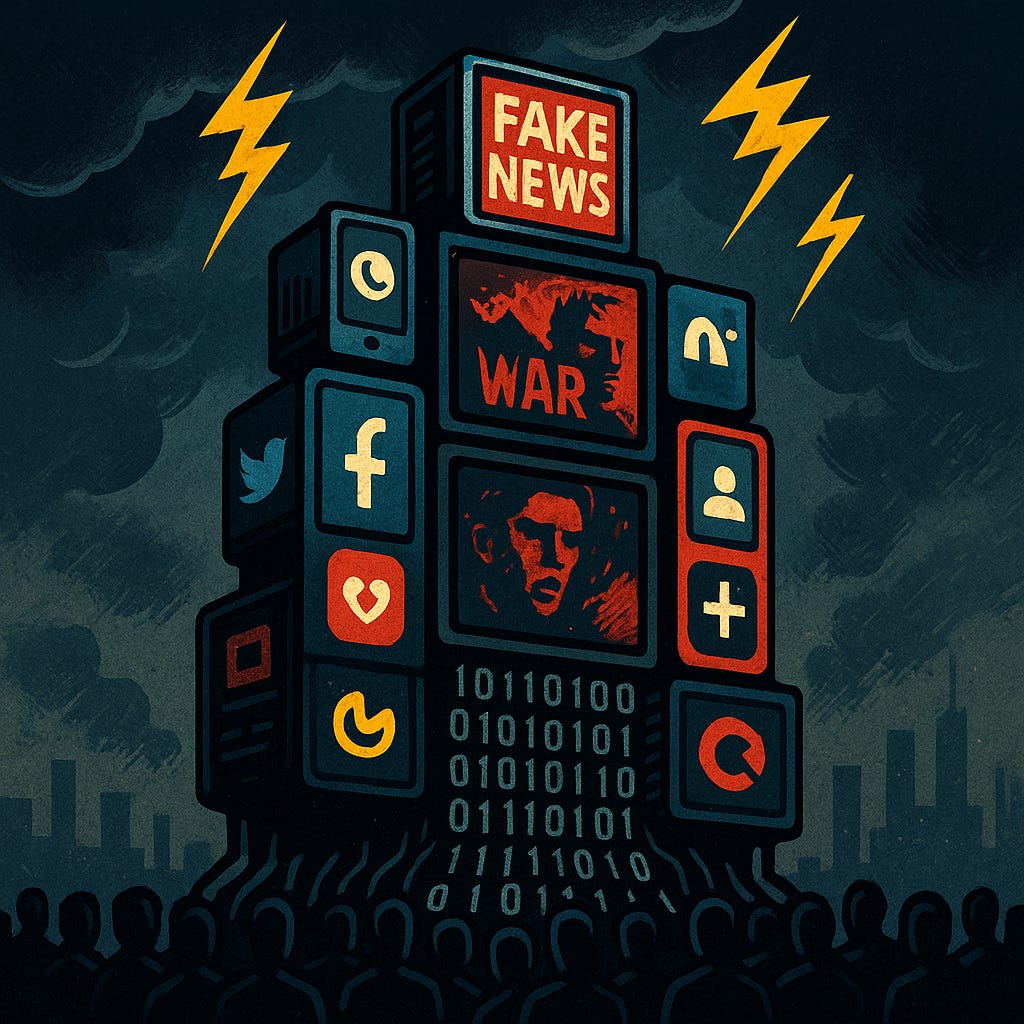
Can you make it a lot more simplified? Like level 1?AI likes levels. Level 1 denotes the most simplified design while a Level 10 is elaborate and more noisy. So it does this…
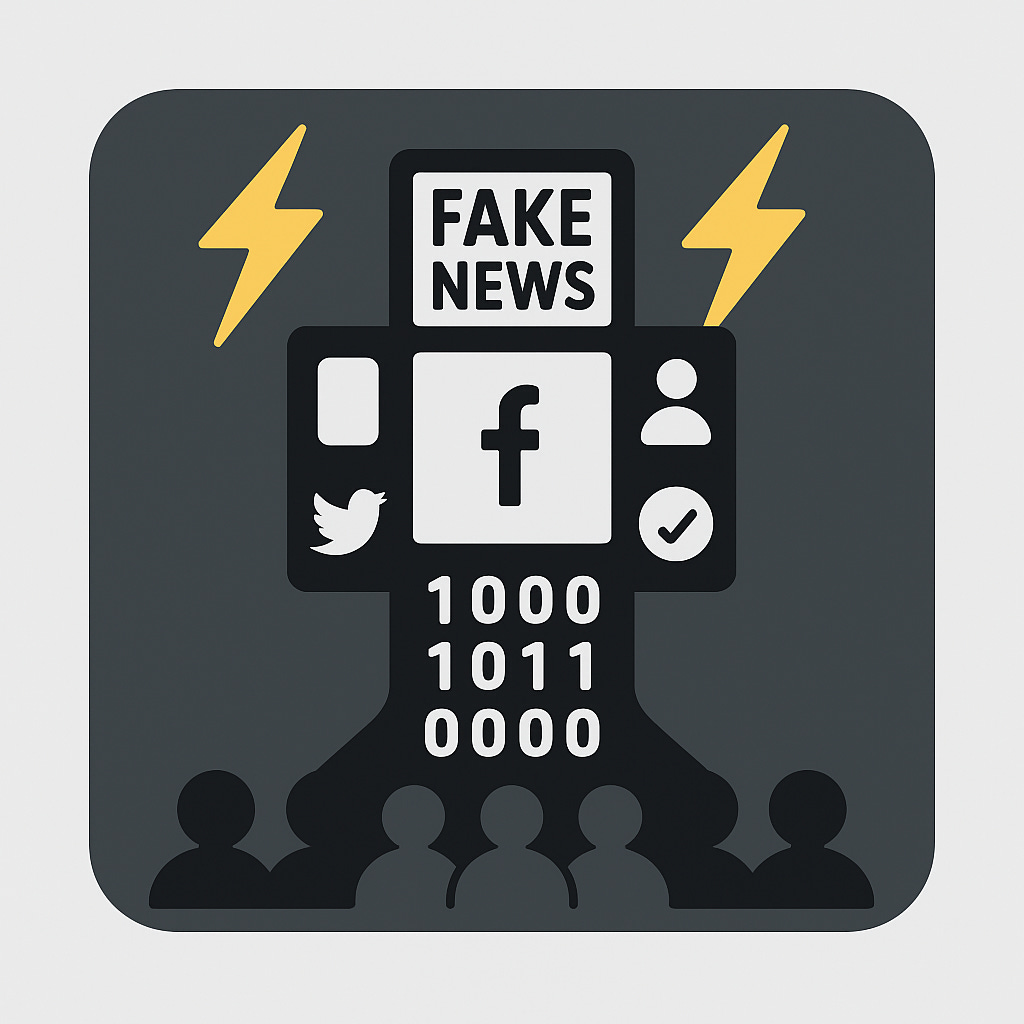
I then ask it…
Remove "Fake News" and other social network stuff on it. Go for a more silhouetted look that is more about looking to find the truth in stuff. Radical Insider is all about being grounded with facts and educating the public as a father, a software engineer and a coach. At least it's square. lol.It then hilariously responds with:

Eww. No silhouettes. Bad idea. Let's try something else. Stay simple but don't go in this direction. Imagine this icon/logo in other visual material. Keep going. Go color and again, no silhouettes.So what does it do?

This is not working
A friend even suggested pulling an image from the internet and modifying it through AI. But that defeats the entire purpose of originality and ownership.
So... Is AI Useless for Branding?
Nope. It’s actually a beast if you use it right. Think of AI as your endlessly caffeinated intern. Here’s where it wins:
Moodboarding
Throw in keywords, brand personality traits, emotional tones—and AI can generate dozens of visual references in seconds. It helps you explore styles (gritty, playful, high-end, brutalist) before you commit to one. It lets your team see the vibe of a direction early.
But it’s inspiration, not instruction. You still need a human eye to curate what aligns with your brand’s story—and to know when something looks good but feels off.
Naming Help
AI is excellent at brute-forcing name ideas. It can generate hundreds of brand name combos across tone types (playful, serious, nostalgic, futuristic). It helps brainstorm options fast.
But again—it doesn’t know what’s too close to a competitor. Or what resonates in your niche. Or what sounds like a dating app when you’re building a fintech platform.
Concept Drafts
Rapid visual ideation. Want to see how your brand could look on packaging, signage, or mobile UI? AI can give you starter visuals. It’s a thumbnail sketch machine.
Just don’t mistake them for finished work. That’s where your human designer takes over, bringing balance, originality, and polish.
Final Whistle: Don’t Bench the Designer
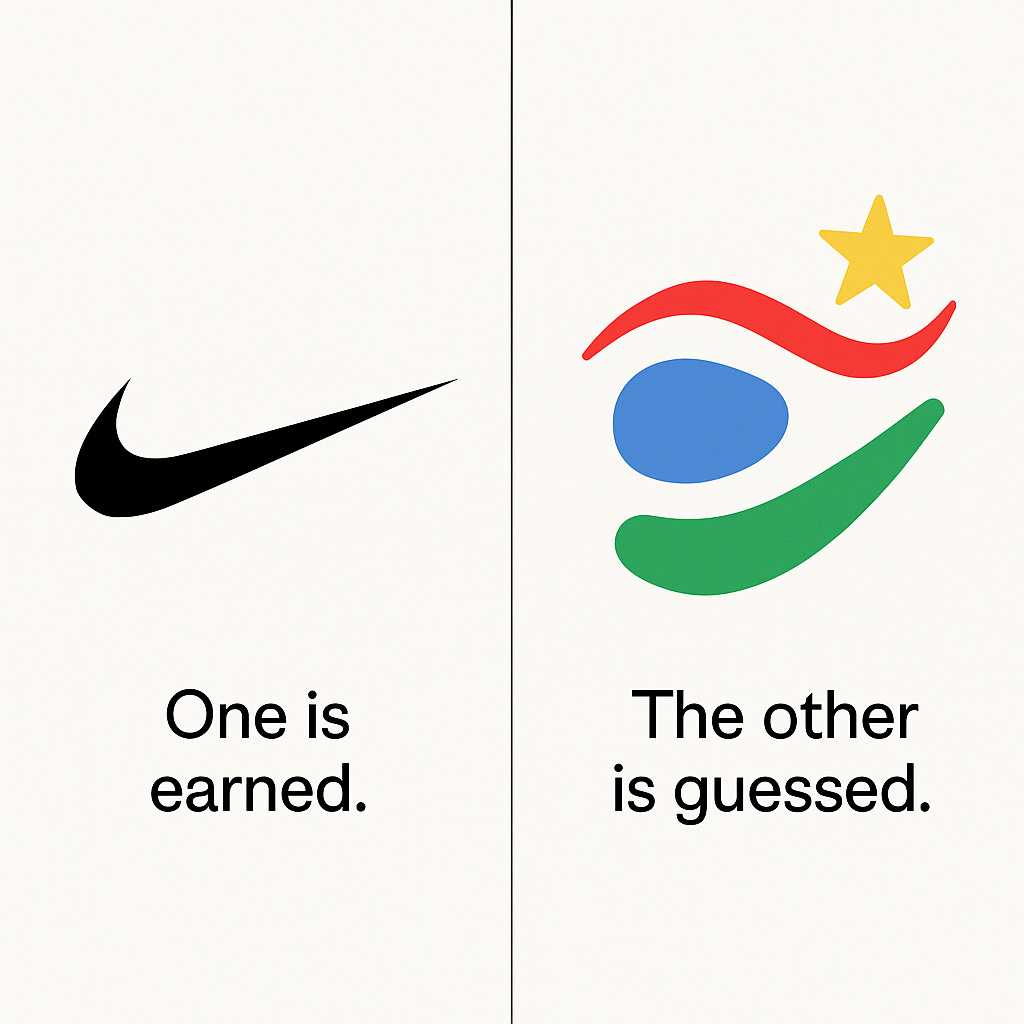
Here’s the hard truth: you still need graphic designers and brand specialists. Maybe more than ever.
What you see in the media—those “AI made this logo in 10 seconds!” headlines—don’t tell the full story. They’re novelty, not legacy. Behind every enduring brand is someone who knows how to weave meaning into pixels.
You still need:
Your friend who actually studied typography
That Fiverr freelancer who knows color psychology
A creative director who understands business and story
Branding is not just about standing out. It’s about belonging to something. And AI can’t feel that. It doesn’t know if your logo makes someone feel included, nostalgic, or inspired.
The takeaway? Use AI to brainstorm, to explore, to warm up the creative muscles. But when it comes time to ship something that lasts, bring in a human. Logos aren't just made—they're earned.